WSNC nutrition education
Digestive Enzymes vs. Probiotics: Which Fits Your Goal?
Digestive enzymes and probiotics affect digestion in different ways. Enzymes help break down food components; probiotics are live microorganisms associated with specific health benefits when used in appropriate preparations and amounts. Prebiotics are another category: they provide material that certain microorganisms can use. These terms should not be treated as interchangeable names for a single gut-health solution. This guide explains the differences and uses Standard Process product examples to show what to check on a label before making a selection.
Explore Digestive Support →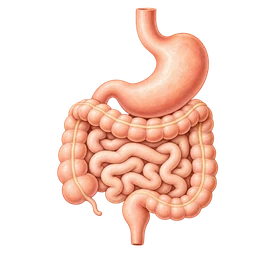
Understand the different functions first
Your digestive system naturally produces enzymes that participate in breaking down food. Different enzymes act on different food components. A supplement label may describe an enzyme blend, but the presence of the word digestive does not establish that every formula contains the same enzymes, activity information or supporting ingredients. Begin with the complete ingredient statement.
Probiotics involve live microorganisms rather than the same food-breakdown function. Their evidence needs to be considered for a particular preparation and purpose. Asking whether enzymes or probiotics are better without identifying the question is therefore incomplete. A more useful comparison asks what each product actually contains and which evidence, if any, applies to the goal you are researching.
References: Johns Hopkins Medicine: Digestive enzymes and supplements · NIH ODS: Probiotic strains, evidence and selection
Read an enzyme label by preparation and directions
Look for the enzyme names, their sources, any declared activity information and the complete formula around them. Other ingredients can change the comparison. A product that combines gastric-support ingredients with enzymes is not equivalent to an enzyme-only preparation simply because both appear in a digestive category. Follow the directions and cautions for the exact product.
Keep nonprescription supplements separate from prescription pancreatic enzyme treatment. A diagnosed enzyme insufficiency requires clinical evaluation and care; an over-the-counter comparison should not be used to replace that treatment. Persistent digestive symptoms also deserve assessment. The detailed enzyme guide linked below provides a narrower place to compare preparations and their label information.
References: Johns Hopkins Medicine: Digestive enzymes and supplements · FDA: Information for supplement consumers
Read probiotic names, quantities and storage details
A probiotic comparison starts with identifying the organisms and, when declared, their strain designations. Then review the labeled serving, CFU statement, storage conditions and whether the quantity is described at manufacture or through shelf life. A larger CFU number by itself cannot establish that a product is better suited to a particular person or purpose.
Evidence for one strain or combination should not be automatically transferred to another formula with a similar category name. Ask whether the studied preparation matches the label you are reading. Ingredient names, serving information and the full product directions are more useful than treating all probiotics as one interchangeable group. Individual suitability and safety also deserve attention.
References: NIH ODS: Probiotic strains, evidence and selection · NIH NCCIH: Probiotics, usefulness and safety
Keep prebiotics distinct from probiotics
Prebiotic ingredients are not the same as live probiotic microorganisms. Inulin is an example of an ingredient used in this different role. Some products combine microbial and prebiotic ingredients, so it is important to read the full formula rather than classify it by one word in the name.
This distinction is practical when you compare products in a store. You may see an enzyme blend, a probiotic preparation, a prebiotic ingredient and a combination formula next to one another. Their proximity does not establish equal purposes, equivalent servings or a need to buy all of them. Identify which label question you want answered before comparing the packages.
References: NIH ODS: Probiotic strains, evidence and selection
Compare four different digestive product examples
Zypan, Multizyme, ProSynbiotic and Prebiotic Inulin illustrate distinct formula approaches in the WSNC catalog. The examples are organized to make differences visible. They are not a suggested four-product routine, and they do not establish that a particular product will address unexplained bloating, discomfort or another symptom.
Open each complete record when you need exact ingredients, directions, cautions or package options. Keep the product’s own label at the center of the comparison. An educational explanation of enzymes, microbes or prebiotic ingredients cannot replace the information specific to a finished formula or establish a personal reason to combine several products.
| Product | Listing focus | Declared formula in brief | Label directions |
|---|---|---|---|
| Zypan®View product →Standard Process | Digestive support combining betaine hydrochloride, pepsin and pancreatin to support normal gastric pH and healthy protein digestion.* | The proprietary blend contains betaine hydrochloride, bovine pancreas Cytosol™ extract, pepsin, pancreatin, ammonium chloride, bovine spleen and ovine spleen, with cellulose and calcium stearate. | Two tablets with each meal, or as directed. Swallow the tablets whole; chewing is not recommended.Full ingredients and cautions → |
| Multizyme®View product →Standard Process | A broad digestive-enzyme formula with pancreatin plus plant and microbial enzymes for the breakdown of proteins, carbohydrates and fats.* | Standard Process listing text identifies a 360 mg proprietary blend per capsule containing date powder, defatted almond, pancreatin (3x), bromelain, organic pineapple fruit powder, papain, amylase, lipase and cellulase. Its linked Supplement Facts image identifies a 464 mg blend per capsule with pancreatin listed first. These official materials differ; confirm the version on your package with your healthcare practitioner. The capsule ingredients include gelatin. | One capsule per meal, or as directed by your healthcare practitioner.Full ingredients and cautions → |
| ProSynbioticView product →Standard Process | A synbiotic blend pairing four probiotic microorganisms with chicory-root inulin to support gut microbiota, regularity and intestinal health.* | Three capsules provide a 1.3 g total proprietary blend containing inulin (chicory root fiber), Saccharomyces boulardii (500 mg), Lactobacillus acidophilus, Lactobacillus paracasei and Bifidobacterium animalis subsp. lactis. The individual inulin amount is not disclosed. Other ingredients are cellulose, water and calcium stearate. | Three capsules per day, or as directed. Store in a cool, dry place.Full ingredients and cautions → |
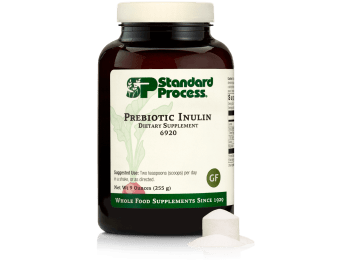
| Prebiotic InulinView product →Standard Process | Supports bone health, the immune system and gut balance* | Each Serving Size (2 Teaspoons) contains: Calories 15, Total Carbohydrate 6 g, Dietary Fiber (as Inulin [Chicory root fiber]) 5 g, Total Sugars <1 g, Calcium 200 mg, Magnesium 40 mg. | Two teaspoons (scoops) per day in a shake, or as directed.Full ingredients and cautions → |
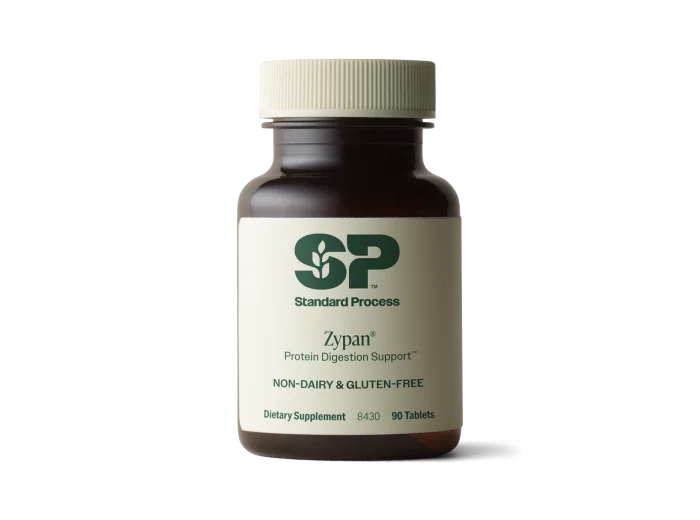
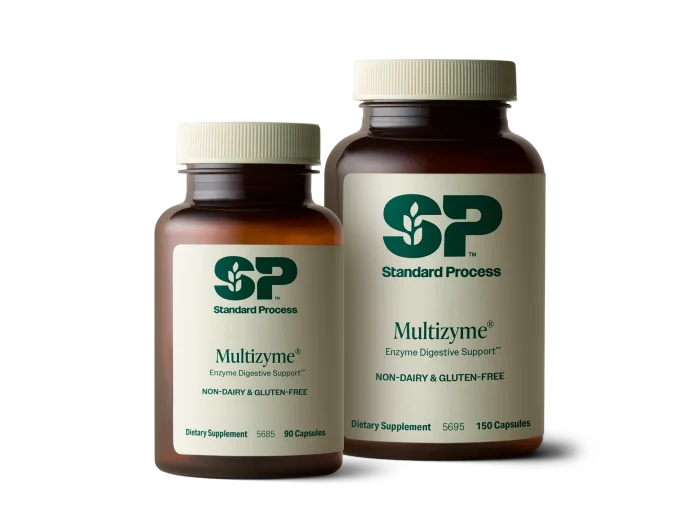
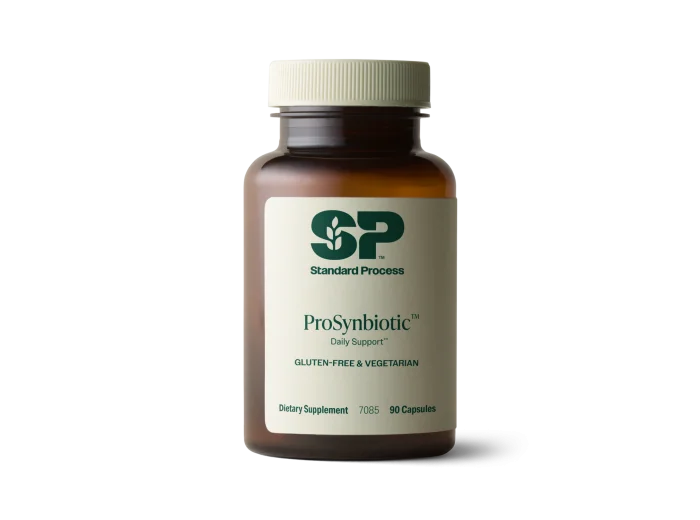
Zypan®
Zypan belongs in a gastric and enzyme-formula comparison. Read its complete ingredient statement, including the ingredients that distinguish it from a simple enzyme list. Review its own directions and cautions before comparing it with Multizyme. The shared digestive category does not establish equivalent servings or a reason to use both. Open the detailed record to keep the exact formula and selected package clear.
View complete ingredients, cautions and sizes →Buy Zypan® through WSNC inSITE ↗Multizyme®
Multizyme is a separate enzyme-blend example. Compare the named ingredients, any declared enzyme information and the manufacturer’s directions with the product you are already considering. Do not substitute a tablet count for a preparation-specific comparison. Its full record is the appropriate place to check the details that a short guide cannot reproduce, including cautions and complete ingredients.
View complete ingredients, cautions and sizes →Buy Multizyme® through WSNC inSITE ↗ProSynbiotic
ProSynbiotic offers a microbial and combination-formula comparison rather than the same function as a digestive enzyme blend. Review its declared organisms, full ingredient list and quantity statement in context. Check the serving and storage instructions for this exact product. A higher number or a familiar organism name alone does not establish that it matches a particular study or individual need.
View complete ingredients, cautions and sizes →Buy ProSynbiotic through WSNC inSITE ↗Prebiotic Inulin
Prebiotic Inulin illustrates why a prebiotic ingredient should be distinguished from a probiotic preparation. Review the product’s own ingredient statement, serving and directions rather than assuming it supplies the same organisms or performs the same role as a product labeled probiotic. Its inclusion helps you compare categories; it is not an instruction to add a prebiotic to every enzyme or microbial formula.
View complete ingredients, cautions and sizes →Buy Prebiotic Inulin through WSNC inSITE ↗References: FDA: Information for supplement consumers · Johns Hopkins Medicine: Digestive enzymes and supplements · NIH ODS: Probiotic strains, evidence and selection
Match the evidence to a specific question
Useful evidence identifies a preparation, population, amount and outcome. A general statement about gut health can hide those details. For example, a study of one probiotic strain does not establish effects for every multi-organism product, and a prescription enzyme study does not automatically apply to a retail blend. Keep the studied preparation and the product label separate until a meaningful match can be established.
Also consider the person using the product. Health conditions, medicines, immune status and the reason for the digestive concern can change which questions matter. Seek professional advice when those circumstances require it. A comparison page should help you prepare that conversation rather than turn uncertain symptoms into a diagnosis or an automatic purchase.
References: NIH NCCIH: Probiotics, usefulness and safety · Johns Hopkins Medicine: Digestive enzymes and supplements
Choose a clear next step instead of a larger stack
Write down the question you are trying to answer, the product you already use and any information that remains unclear. Then compare the appropriate labels side by side. Check the formula identity before the package size. Bottle quantity and labeled serving are separate facts, and neither provides a conversion between different preparations.
If you are considering more than one product, bring the complete ingredient lists to your practitioner or pharmacist. Ask about overlap, directions and individual suitability. The direct store links below preserve the selected package, while the detailed product pages provide the fuller records. You can also return to the enzyme or probiotic guide when you need more depth on one category.
References: FDA: Information for supplement consumers
Questions to discuss before choosing a supplement
What is the main difference between digestive enzymes and probiotics?
Enzymes participate in breaking down food components, while probiotics are live microorganisms considered in relation to specific health benefits and preparations. They are different categories, so one should not be assumed to replace the other. Compare the actual ingredients and evidence for the question you are researching rather than treating both as the same kind of digestive supplement.
Are prebiotics the same as probiotics?
Prebiotics and probiotics are different. Prebiotic ingredients can be used by certain microorganisms, whereas probiotic products contain live microorganisms. A formula may combine both types of ingredients. Read the complete label so that you know what is actually present, and do not infer the same purpose or serving from similar-sounding product names.
Can I take enzymes and probiotics together?
A shared digestive-health goal does not establish that a combination is appropriate. Review the complete formulas, directions and cautions alongside medicines and any diagnosed conditions. A practitioner can help assess the reason for using either product. This guide does not create a universal combination routine or advise adding several products for an unexplained symptom.
Does more CFU mean a better probiotic?
CFU is one label fact, not a complete measure of suitability. Organism and strain identity, the preparation studied, the intended purpose, serving information and storage conditions also matter. Compare whether the quantity statement applies at manufacture or through shelf life. Do not assume that the largest number establishes the best product for every person.
Can a supplement replace prescription digestive enzymes?
Prescription enzyme treatment and nonprescription supplements should be kept distinct. A diagnosed enzyme insufficiency requires clinical care, and this guide does not advise changing that treatment. If digestive symptoms persist, seek an assessment rather than choosing repeatedly among retail products based only on general claims or product-category names.
Evidence and product information sources
- Johns Hopkins Medicine: Digestive enzymes and supplements ↗
- NIH ODS: Probiotic strains, evidence and selection ↗
- NIH NCCIH: Probiotics, usefulness and safety ↗
- FDA: Information for supplement consumers ↗
Educational references explain nutrition and evidence limits; they do not endorse WSNC or the products shown. Product comparisons use the existing catalog records. Confirm the current manufacturer label, selected package, complete directions and cautions before ordering.
Prepare a practitioner conversation →