Animal nutrition education
Dog Digestion During Boarding: Food, Supplements and Written Instructions
Boarding preparation should make a dog’s established feeding and care routine clear to another person. A digestive supplement is one possible item on that handoff, not a guarantee against illness or a replacement for boarding requirements. Review the plan before departure, preserve exact labels and agree on whom the caregiver should contact when something is uncertain.
Explore Animal Health →
Start with the provider’s actual requirements
Ask the boarding provider about food handling, administration policies, labeling and the information they need from the veterinarian. Requirements differ, so a general supplement article cannot establish that a dog is ready to board. Keep those requirements separate from a product comparison. Confirm whether the provider can follow the existing routine before arrival rather than assuming any powder, tablet or special preparation will be accepted and administered as intended.
Write the food routine in a way someone else can follow
Identify the exact food, ordinary instructions and any restrictions already agreed with the veterinarian. Include treats and other products so that an unfamiliar caregiver does not fill gaps by guessing. A clear handoff should distinguish a routine instruction from a question that needs a call. If several people are involved, identify who confirms that the instructions were followed. The purpose is consistency and accountability, not a new feeding plan created by a shopping guide.
Compare Standard Process digestive and maintenance examples
Canine Enteric Support and Canine Whole Body Support illustrate a targeted digestive blend and a broader maintenance blend. Their inclusion does not recommend starting both before boarding. Use the full recorded panels to understand the differences and discuss whether either belongs in the established routine. A shared ingredient or category does not make the two formulas interchangeable. The main dog-digestion guide offers a deeper formula comparison; this page focuses on the handoff.
| Product | Listing focus | Declared formula in brief | Label directions |
|---|---|---|---|
| Canine Enteric SupportView product →Standard Process Veterinary Formulas | Provides general digestive system support | A 400 mg blend per ⅛ tsp includes porcine stomach, duodenum and jejunum, L-glutamine, wheat-derived ingredients and other tissue and plant ingredients. No probiotic CFU count is declared. | Manufacturer daily schedule for dogs: 1–10 lb, ⅛ tsp once daily; 11–20 lb, ⅛ tsp twice daily; 21–40 lb, ¼ tsp twice daily; 41–60 lb, ½ tsp twice daily; 61–80 lb, ¾ tsp twice daily; over 80 lb, 1 tsp twice daily, or as directed by…Full ingredients and cautions → |
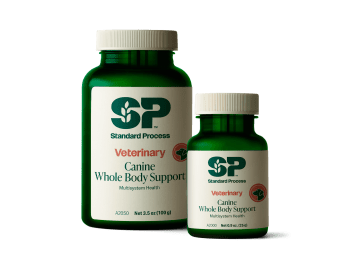
| Canine Whole Body SupportView product →Standard Process Veterinary Formulas | Provides general multisystem support* | The powder lists wheat germ, liver, vegetables, tissue extracts, botanicals, minerals and other ingredients. The panel references ⅛- or ½-teaspoon preparations without individual nutrient amounts. | Manufacturer daily schedule for dogs: 1–10 lb, ⅛ tsp once daily; 11–20 lb, ⅛ tsp twice daily; 21–40 lb, ¼ tsp twice daily; 41–60 lb, ½ tsp twice daily; 61–80 lb, ¾ tsp twice daily; over 80 lb, 1 tsp twice daily, or as directed by…Full ingredients and cautions → |

Canine Enteric Support
A canine digestive powder that requires its own label and measuring instructions during a caregiver handoff. It is not represented as prevention of boarding-related illness or a substitute for veterinary assessment.
View complete ingredients, cautions and sizes →Buy Canine Enteric Support through WSNC inSITE ↗Canine Whole Body Support
A distinct maintenance blend that should remain identified separately if already part of an appropriate routine. Its broad purpose does not make it interchangeable with the enteric formula or a default pre-boarding addition.
View complete ingredients, cautions and sizes →Buy Canine Whole Body Support through WSNC inSITE ↗Keep packages, scoops and instructions together
Label each product clearly and retain the exact manufacturer directions, species information and any veterinary instructions. Do not send several loose powders with a shared scoop and an informal note to use a little. Package-specific measures and weight schedules must remain recognizable. If the provider cannot follow a preparation or storage requirement, resolve that before departure. A pre-portioned arrangement still needs appropriate product identification and instructions; convenience does not establish stability or a correct amount.
Agree on what to do when a routine cannot be followed
Ask the veterinarian how the caregiver should handle refused food, an uncertain administration or another concern. Do not leave the provider to choose an extra amount, substitute a similar formula or interpret a missed serving as a reason to double the next one. Keep the authorized contact and veterinary details easy to find. A useful written plan identifies the limits of the caregiver’s role as clearly as the steps they are expected to follow.
Keep illness assessment separate from supplement adjustments
A digestive-support name does not establish protection against infection, contaminated food or every problem that can occur away from home. If the dog becomes unwell, the caregiver needs a care and contact plan rather than a direction to increase a powder. Review ongoing concerns before departure and clarify how veterinary help can be obtained. Maintain the distinction between nutritional product selection, facility requirements and assessment of illness throughout the handoff.
Prepare a return-home review
Ask for a factual record of the food and products actually given, any instructions that could not be followed and any concerns observed. Share relevant information with the veterinarian rather than attributing every change to boarding stress or one supplement. Before another stay, update the written routine to reflect the current exact packages and care plan. This guide establishes no universal pre-boarding loading schedule, prevention claim or treatment routine; those should not be inferred from its practical checklist.
References: FDA: animal health and veterinary care
Questions pet owners ask
Should I start a new digestive supplement before every boarding stay?
No automatic need is established. Discuss the actual routine and any proposed change with the veterinarian before departure.
Do supplements replace boarding health requirements?
No. Confirm the provider’s current requirements and any veterinary documentation separately.
Can the caregiver increase the amount if the dog seems stressed?
Do not leave an improvised increase as the plan. Provide exact instructions and a clear contact for concerns.
What if some food or powder is left behind?
Follow the veterinarian’s written guidance for uncertain administration rather than automatically compensating with more product.
Does digestive support prevent infection?
This guide makes no prevention claim. Nutritional routine and assessment of illness are separate questions.
Evidence and product information sources
- FDA: animal food and supplement categories ↗
- FDA: animal health and veterinary care ↗
- Canine Enteric Support authorized product information ↗
- Canine Whole Body Support authorized product information ↗
Animal guides explain label comparisons and questions for a veterinarian. They do not replace veterinary diagnosis, treatment or an individualized diet review.
Educational references explain nutrition and evidence limits; they do not endorse WSNC or the products shown. Product comparisons use the existing catalog records. Confirm the current manufacturer label, selected package, complete directions and cautions before ordering.
Return to the species collection →