Animal nutrition education
Skin and Coat Supplements for Dogs: Blends and Omega-3 Labels
Skin and coat supplement searches can lead to very different products: complex canine blends, oils and softgels. Compare the complete formula and the actual reason for interest before choosing. A skin-support label does not identify the cause of scratching, coat changes or another new concern, and it should not replace a veterinary assessment.
Explore Animal Health →
Separate coat appearance from a health concern
Describe what has changed, where you notice it and whether the dog’s routine, food or other products changed around the same time. A comparison guide cannot determine whether the issue is nutritional or has another cause. Bring new or persistent concerns to the veterinarian before selecting a product on the assumption that it addresses the cause. Photographs and a clear timeline can make that conversation more specific than the phrase skin support alone.
Distinguish a complex blend from an oil product
A dermal-support powder and an omega-3 softgel are different preparations with different complete ingredients. Their presence in one collection does not make them equivalents or a recommended combination. Read the whole label, identify the stated purpose and retain the serving unit for each declaration. An ingredient study, a brand story or a broad coat claim should not be used to promise that a particular finished formula will resolve an individual dog’s concern.
Compare Standard Process skin and fatty-acid examples
Canine Dermal Support illustrates a complex canine blend. VF Omega-3 for Pets illustrates a pet-specific softgel with recorded EPA and DHA declarations. The panels below show the complete existing records, not an instruction to combine the products. The individual pages provide full cautions and directions and preserve the direct WSNC inSITE purchase path. Discuss which product, if any, answers the defined nutritional question within the current feeding and care plan.
| Product | Listing focus | Declared formula in brief | Label directions |
|---|---|---|---|
| Canine Dermal SupportView product →Standard Process Veterinary Formulas | Supports skin health | Per ⅛ tsp: a 390 mg blend with liver, L-glutamine, chlorella, green mussel (shellfish), milk thistle extract, wheat-derived ingredients, tissue ingredients and botanicals. | Manufacturer daily schedule for dogs: 1–10 lb, ⅛ tsp once daily; 11–20 lb, ⅛ tsp twice daily; 21–40 lb, ¼ tsp twice daily; 41–60 lb, ½ tsp twice daily; 61–80 lb, ¾ tsp twice daily; over 80 lb, 1 tsp twice daily, or as directed by…Full ingredients and cautions → |
| VF Omega-3 for PetsView product →Standard Process Veterinary Formulas | Bridges EPA/DHA nutritional gap for pets | Per softgel guaranteed minimums: EPA 250 mg and DHA 200 mg. Ingredients include anchovy and sardine fish oil concentrate, gelatin, rosemary and astaxanthin. | Manufacturer daily schedule: cats and dogs under 10 lb, consult a veterinarian; cats and dogs 10–20 lb, 1 softgel; dogs 21–40 lb, 2 softgels; 41–60 lb, 3 softgels; 61–80 lb, 4 softgels; 81–100 lb, 5 softgels; 101–120 lb, 6…Full ingredients and cautions → |
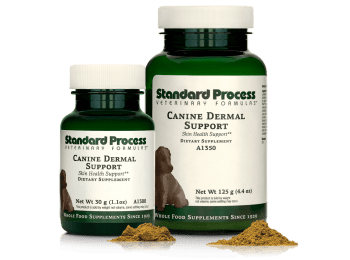
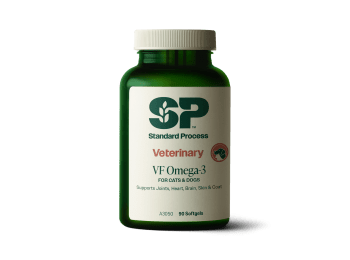
Canine Dermal Support
A canine dermal-support blend with multiple recorded ingredients and package-specific powder directions. Review the complete list and cautions rather than treating the category name as an explanation for a skin problem.
View complete ingredients, cautions and sizes →Buy Canine Dermal Support through WSNC inSITE ↗VF Omega-3 for Pets
A pet omega-3 softgel with separately recorded EPA and DHA declarations. Compare the pet-specific directions, complete ingredient list and existing routine. It is not an interchangeable substitute for a human oil selected by bottle size alone.
View complete ingredients, cautions and sizes →Buy VF Omega-3 for Pets through WSNC inSITE ↗Read EPA and DHA separately from total oil
An oil quantity, a softgel count and the declared EPA or DHA amount are not interchangeable measures. Keep the exact units and serving basis when comparing labels. Do not choose solely by the largest number on a bottle or substitute a human fish-oil schedule for animal directions. The complete pet formula, species instructions, other ingredients and any medicines must be considered together. A numerical comparison is useful only when the preparations being compared are identified correctly.
Keep dietary restrictions visible
Review every ingredient rather than looking only for a featured oil or botanical. Tissue ingredients, fish or shellfish sources, capsule material and other components may matter depending on the particular formula and animal. Tell the veterinarian about existing food restrictions and all other products offered. Whole food wording does not establish an allergy-safe product, and a skin category does not prove the formula avoids every ingredient relevant to your dog’s current feeding plan.
Consider storage and administration before purchase
Read the exact package instructions and determine whether the proposed routine can follow them. A powder mixed into food and a softgel have different practical requirements. Ask how to handle refused food or difficulty administering the format rather than assuming products can be opened, crushed or prepared interchangeably. Keep the original label and correct measuring tool available. If storage conditions or directions are unclear, seek clarification from the manufacturer or veterinarian before changing them.
Prepare a focused skin-nutrition discussion
Bring the food label, medicines, other supplements and the proposed product’s complete information. Ask whether there is a defined nutritional reason for the formula, how it fits the diet and what should prompt reassessment. A supplement does not replace diagnosis or prescribed management of a skin condition. Keep the product decision tied to the veterinary plan instead of repeatedly adding bottles when an unresolved concern continues. There is no guaranteed coat-response timeline established by this page.
References: FDA: animal health and veterinary care
Questions pet owners ask
Are dermal blends and omega-3 oils the same?
No. Compare the preparations, complete ingredients and manufacturer instructions rather than assuming equivalence from a shared skin-and-coat category.
Does scratching show that a dog needs omega-3?
This guide cannot identify the cause. Discuss new or persistent signs with your veterinarian.
Can I use my own fish oil for the dog?
Do not substitute a human formula or schedule by assumption. Review the exact animal preparation and veterinary instructions.
Should I compare total oil or EPA and DHA?
Record all relevant declarations with their units and serving basis. A total oil amount alone does not state the quantities of EPA and DHA.
Do these products replace skin treatment?
No. They are nutritional comparisons and do not replace veterinary diagnosis or prescribed care.
Evidence and product information sources
- FDA: animal food and supplement categories ↗
- FDA: animal health and veterinary care ↗
- Canine Dermal Support authorized product information ↗
- VF Omega-3 for Pets authorized product information ↗
Animal guides explain label comparisons and questions for a veterinarian. They do not replace veterinary diagnosis, treatment or an individualized diet review.
Educational references explain nutrition and evidence limits; they do not endorse WSNC or the products shown. Product comparisons use the existing catalog records. Confirm the current manufacturer label, selected package, complete directions and cautions before ordering.
Return to the species collection →