WSNC nutrition education
Supplements for Heart Health: What to Compare
Supplements for heart health are easiest to compare when you start with a specific nutritional question. An omega-3 oil, a botanical extract and a multi-ingredient formula are different products, even when they appear in the same heart-health collection. This guide explains how to separate their ingredient approaches, read their labels and recognize the limits of the evidence. You can explore Standard Process examples below, then review their complete records and selected packages. A useful choice fits your diet, existing care and individual circumstances; a broad heart-health description alone cannot establish that fit.
Explore Cardiovascular & Circulation →
Start with the question behind your search
Write down what you want help understanding before you compare bottles. Are you assessing your fish intake, reading an EPA and DHA label, comparing a food-based blend, or checking whether something overlaps with an existing supplement? These questions lead to different comparisons. They also make a conversation with your healthcare professional more useful than asking which heart supplement is best for everyone.
Separate a nutrition question from management of a diagnosed condition. A supplement category does not establish a treatment for high cholesterol, abnormal blood pressure or a heart rhythm problem. Bring your current medicines and any relevant test results to the clinician who manages that care. Product education should help you understand a label without encouraging you to replace treatment with a shopping decision.
References: Johns Hopkins Medicine: Heart-health supplements and evidence
Keep food and supplements in their proper roles
A varied eating pattern supplies nutrients in a different context from a capsule or tablet. Begin by considering what you regularly eat, what you avoid and whether a professional has identified a nutritional gap. It is more useful to describe a consistent dietary pattern than to judge your needs from one unusually good or poor meal.
Food-based ingredients can be part of a supplement formula, but the phrase whole food does not explain the complete composition of every product. Read the actual ingredient statement and Supplement Facts panel. A Standard Process product may use a different ingredient approach from another product in the same brand family. Choosing by brand name alone can hide distinctions that matter to your dietary preferences and existing routine.
References: FDA: Information for supplement consumers
Compare EPA and DHA rather than total oil alone
Omega-3 labels can list total oil alongside individual fatty acids. Those figures answer different questions. Start with the labeled serving, then look for the declared amounts of EPA and DHA. A large number on the front of a bottle may describe oil weight rather than the quantity of either fatty acid. Compare like units and like serving sizes before drawing a conclusion.
Source and delivery form are additional choices. A liquid and a softgel can have different serving instructions, flavoring, storage needs and allergen considerations. Read those details rather than assuming that a teaspoon equals one capsule. If a specific omega-3 preparation was studied for a medical outcome, that study does not automatically establish the same outcome for every oil or blend on a retail shelf.
References: NIH ODS: Omega-3 fatty acids
Distinguish oils from multi-ingredient formulas
An oil product provides a different comparison from a formula containing several nutrient, food or tissue ingredients. Ask what the complete ingredient statement establishes, which amounts are declared and whether a blend prevents you from identifying an individual ingredient quantity. A familiar ingredient name inside a blend is not enough to reproduce the conditions of a study.
Product names that share a family label also deserve a side-by-side review. Do not assume that two versions have identical formulas, dietary attributes or directions. The product records below preserve those separate identities. This approach helps you compare products without turning a category listing into a claim that they work in the same way or should be combined.
References: Johns Hopkins Medicine: Heart-health supplements and evidence · FDA: Information for supplement consumers
Ask what the evidence actually studied
A useful evidence question has several parts: which preparation was studied, in whom, at what amount, for how long and against which outcome? Research about correcting an inadequate nutrient intake is different from research about preventing a cardiovascular event. A change in a laboratory marker is also different from demonstrating a meaningful clinical benefit.
Keep the finished formula separate from an ingredient study. The presence of a studied nutrient does not by itself prove that the complete product produces that result. Independent educational references can explain these distinctions, while manufacturer information establishes what is in the selected product and how its label directs use. Both sources matter, but they answer different questions.
References: Johns Hopkins Medicine: Heart-health supplements and evidence · NIH ODS: Omega-3 fatty acids
Compare four Standard Process formula examples
The examples below offer two oil formats and two separately identified formula versions. They are selected to illustrate label differences, rather than to create a four-product regimen. Open a detailed product record when you need the complete ingredients, directions, cautions or package choices. Keep that record alongside the current manufacturer listing as you compare.
A sensible shortlist may contain one product, several alternatives, or no addition to your routine. The number of examples on this page is not a recommendation about how many supplements to take. Use the product-specific questions to narrow the information you want to discuss, then choose a package only after confirming the exact product and its instructions.
| Product | Listing focus | Declared formula in brief | Label directions |
|---|---|---|---|
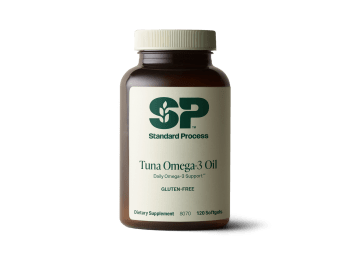
| Tuna Omega-3 OilView product →Standard Process | Supports general health and helps bridge omega-3 dietary gap* | Per two-softgel serving: tuna oil 1.3 g, DHA 300 mg and EPA 60 mg. | Two softgels twice per day with meals, or as directed. Store in a cool, dark place.Full ingredients and cautions → |
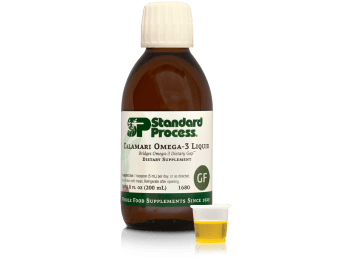
| Calamari Omega-3 LiquidView product →Standard Process | Helps bridge the gap in dietary omega-3 intake* | Each Serving Size (1 Teaspoon (5 mL)) contains: Calories 45, Total Fat 5 g, Saturated Fat 1 g, Polyunsaturated Fat 2 g, Monosaturated Fat 1 g, Cholesterol 110 mg, DHA 800 mg, EPA 400 mg. Ingredients: Calamari oil (squid), natural citrus flavor, sunflower oil, d-alpha tocopherol (vitamin E soy), and rosemary extract. | 1 teaspoon (5 mL) per day, or as directed. May be taken with meals. Refrigerate after opening.Full ingredients and cautions → |
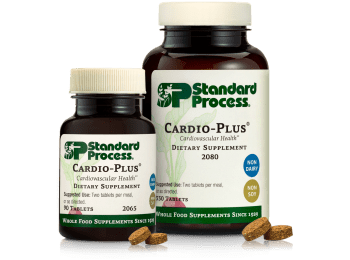
| Cardio-Plus®View product →Standard Process | Helps support heart health* | Two tablets list vitamin C 15 mg, vitamin E 1.3 mg, riboflavin 1.6 mg, niacin 14 mg, B6 0.5 mg, choline 30 mg and selenium 3 mcg. The 540 mg blend includes bovine heart PMG and defatted wheat germ. Contains wheat and animal ingredients. | Two tablets per meal, or as directed.Full ingredients and cautions → |
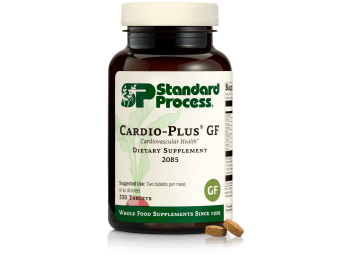
| Cardio-Plus® GFView product →Standard Process | Helps support heart health* | Two tablets list vitamin C 15 mg, vitamin E 1.3 mg, riboflavin 1.6 mg, niacin 14 mg, B6 0.5 mg, choline 30 mg and selenium 3 mcg. The 535 mg blend uses rice bran and includes animal tissues. Gluten-free does not mean vegetarian or vegan; honey is also listed. | Two tablets per meal, or as directed.Full ingredients and cautions → |
Tuna Omega-3 Oil
Use Tuna Omega-3 Oil as an example of an oil-based comparison. Review the recorded serving and the declared fatty-acid information in its detailed product page, then confirm the current selected package in the authorized store. Compare that information with your usual fish intake and any existing oil supplement. The source, allergens and full directions matter alongside EPA and DHA. Its inclusion here does not mean that a particular amount is suitable for every reader or that it is equivalent to a prescription omega-3 preparation.
View complete ingredients, cautions and sizes →Buy Tuna Omega-3 Oil through WSNC inSITE ↗Calamari Omega-3 Liquid
Calamari Omega-3 Liquid provides a separate source and delivery-form comparison. Read its own serving units and storage instructions before comparing it with a capsule. A liquid may raise practical questions about measuring a serving, taste and routine use that do not arise in the same way with softgels. Use the full product record for those details. Do not convert between products using total oil weight alone or assume that their individual fatty-acid amounts match.
View complete ingredients, cautions and sizes →Buy Calamari Omega-3 Liquid through WSNC inSITE ↗Cardio-Plus®
Cardio-Plus is a different formula approach from an omega-3 oil. Open its complete ingredient record and examine the entire blend rather than looking for one familiar nutrient. Consider which declared facts answer your nutritional question and which questions remain for your practitioner. Compare it separately with Cardio-Plus GF, including directions and dietary statements. A shared product-family name does not make the two versions interchangeable, and this guide does not establish a reason to combine a blend with an oil.
View complete ingredients, cautions and sizes →Buy Cardio-Plus® through WSNC inSITE ↗Cardio-Plus® GF
Cardio-Plus GF belongs in a version-specific comparison with Cardio-Plus. Use its own manufacturer ingredient statement, dietary labeling and directions, rather than borrowing information from the other version. The letters in a product name are a starting point for checking a claim, not a replacement for reading the full label and allergen information. Keep the selected version clear when choosing a package so that your order matches the formula you and your practitioner reviewed.
View complete ingredients, cautions and sizes →Buy Cardio-Plus® GF through WSNC inSITE ↗References: FDA: Information for supplement consumers
Review medicines and overlapping products together
Make a single list of prescriptions, nonprescription medicines, vitamins, herbs and combination products. Include amounts from each labeled serving and how often you actually use them. This is especially useful when several bottles mention the same ingredient or when a multi-product pack contains a formula you already take. A combined list is easier for a pharmacist or clinician to review than a collection of category names.
Do not stop or change a prescribed medicine because a supplement is described as natural. Questions about blood-thinning medicines, planned procedures, heart conditions and ingredient interactions belong with the professional managing your care. The full caution statement for each product remains important even when two formulas have similar marketing descriptions.
References: Johns Hopkins Medicine: Heart-health supplements and evidence · FDA: Information for supplement consumers
Build a short, practical comparison
Choose two or three questions that matter to you: Does this supply a nutrient I need? Can I follow its labeled serving consistently? Does the ingredient statement fit my dietary requirements? Can I identify the exact preparation in the research being discussed? Record the answers before adding another product to the comparison.
Then review the selected package. Bottle size changes the quantity being ordered; it does not redefine the product’s instructions or establish a higher serving. The package menus below keep that distinction visible. If an ingredient amount or caution is unclear, pause the purchase comparison and ask for clarification. A complete answer is more valuable than a long list of loosely related products.
References: FDA: Information for supplement consumers
Questions to discuss before choosing a supplement
What is the best supplement for heart health?
There is no single answer that fits every diet, medicine list and health history. Start with the nutritional question and the evidence for a particular preparation. A supplement marketed for heart health is not automatically proven to prevent or treat heart disease. The useful next step is to compare exact labels and discuss individual suitability with the clinician who knows your care.
Are whole-food heart supplements automatically better than other formulas?
The term whole food describes an ingredient approach, not a universal clinical advantage. Review the complete formula, its declared amounts, dietary fit and relevant evidence. Different products may combine foods, isolated nutrients or other ingredients. Compare the actual product rather than assuming that a broad category name establishes better absorption, greater safety or a better outcome.
Can I compare fish-oil products by the number on the front label?
First establish what that number measures. Total oil, total omega-3 content, EPA and DHA can be different quantities. Compare the labeled serving and the amounts actually declared for the fatty acids you are researching. Source, allergens and storage directions are additional differences. Do not infer equivalence from bottle size or total oil weight alone.
Should I take all four products shown here?
The four examples illustrate different labels and formula approaches. They are not a suggested stack. Combining products can introduce ingredient overlap and additional medication questions. Make a complete list of what you already take and use the examples to prepare a focused discussion, rather than treating the number of products on a page as a daily regimen.
Can these supplements replace heart medication?
This guide does not provide instructions to replace or change prescribed care. Decisions about cardiovascular medicines, diagnosed conditions and possible interactions belong with your treating clinician or pharmacist. Bring the exact supplement labels to that discussion, including combination products and their full cautions, so that the review is based on ingredients rather than marketing names.
How do I choose the correct package?
Confirm the product and version first, then compare the available package sizes using the menu. The direct store link retains the selected package. Package quantity is separate from the labeled serving and should not be used to invent a dose. Open the full product page when you need complete directions or want to compare all recorded package options.
Evidence and product information sources
- Johns Hopkins Medicine: Heart-health supplements and evidence ↗
- NIH ODS: Omega-3 fatty acids ↗
- FDA: Information for supplement consumers ↗
Educational references explain nutrition and evidence limits; they do not endorse WSNC or the products shown. Product comparisons use the existing catalog records. Confirm the current manufacturer label, selected package, complete directions and cautions before ordering.
Prepare a practitioner conversation →