WSNC nutrition education
Bone Health After 50: Nutrition & Supplement Choices
Bone health after 50 is a planning question, not simply a reason to buy a larger supplement stack. Your usual food intake, activity, medicines and existing health information all affect which questions deserve attention. This guide helps you organize those details and compare relevant Standard Process labels without assuming that everyone over 50 needs the same products. Use it alongside our general bone-health guide: that article explains nutrient and formula differences, while this one focuses on the decisions that become especially useful in midlife and beyond.
Explore Bone, Joint & Muscle →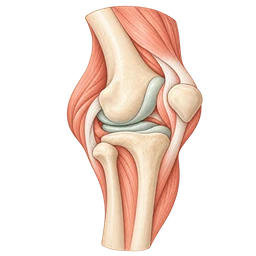
Start with your own history and routine
Two people of the same age can have very different starting points. One may regularly eat calcium-containing foods and already use vitamin D, while another avoids several food groups or takes medicines that need consideration. Write down your current routine and any previous advice before comparing new products. Include powders, multivitamins and occasional supplements, not just the bottle you use most often.
Bring concerns such as a previous fracture, a diagnosed bone condition or a change in function to your healthcare professional. A shopping guide cannot establish your bone density or fracture risk. It can make a discussion more useful by separating the facts you know from the questions you still need answered.
References: NIH NIAMS: Calcium, vitamin D and bone health · NIH NIA: Dietary supplements for older adults
Look at a typical week of food
Consider what you eat across a typical week rather than making a decision from one meal. Include dairy or alternatives, fortified foods, protein sources and any regular restrictions. If you use a fortified drink, read its own label: products with similar names can supply different nutrient amounts. Notes about actual portions can be helpful when you review your intake with a professional.
This exercise is intended to identify questions, not to diagnose a deficiency on your own. It may show where a more detailed dietary review would be useful. It also helps prevent a new supplement from being added without accounting for nutrients already supplied by foods and the products in your cupboard.
References: NIH ODS: Calcium · NIH NIAMS: Calcium, vitamin D and bone health
Use age as context, not as a complete prescription
Public nutrient recommendations can vary by age and sex, but a general reference value is not a personalized instruction to take that amount as a supplement. Food and existing products contribute to total intake. Your healthcare professional can help interpret a reference value alongside your own circumstances and any relevant testing.
The same principle applies to an age-specific multivitamin. The words over 50 do not explain every ingredient, establish a personal deficiency or make a formula suitable for everyone in that age group. Read the amounts and complete ingredients. Review the actual label before adding separate calcium, vitamin D or magnesium products that may overlap with it.
References: NIH NIAMS: Calcium, vitamin D and bone health · NIH NIA: Dietary supplements for older adults
Connect nutrition with strength, movement and balance
Bone health is part of a broader plan that includes appropriate physical activity and maintaining function. Nutrition and movement questions belong together, especially when you want to remain active as you age. Discuss the type and progression of activity that fits your health, ability and any existing limitations with a qualified professional.
A supplement should not be presented as a substitute for that plan. If pain, an injury or a change in balance is limiting activity, seek advice about the cause and a suitable approach. Our Staying Active After 50 guide covers the wider muscle, bone and recovery conversation. This article keeps the focus on organizing bone-related nutrition decisions and label comparisons.
References: NIH NIA: Strength training as we age · NIH NIAMS: Calcium, vitamin D and bone health
Use product examples to ask better questions
The examples below focus on calcium, a separate food-formula comparison, vitamin D and magnesium. You may recognize some from the general bone-health guide. Here, use them to review an existing routine: what do you already take, which declared amounts overlap, and which product information should you bring to your clinician?
Keep a shortlist of questions rather than an automatic list of purchases. A product’s presence in an age-related guide does not establish that it is suitable for you or that it should be combined with the other examples. The complete manufacturer directions and cautions remain specific to each formula.
| Product | Listing focus | Declared formula in brief | Label directions |
|---|---|---|---|
| Calcium LactateView product →Standard Process | A vegan, non-dairy calcium-and-magnesium formula supporting healthy bone structure, muscle contraction, nerve transmission and cellular function.* | Three tablets provide calcium from calcium lactate and calcium stearate plus magnesium from magnesium citrate. | Three tablets per day, or as directed by your healthcare practitioner.Full ingredients and cautions → |
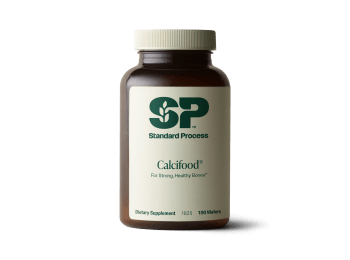
| Calcifood®View product →Standard Process | Helps the body build strong, healthy bones* | Three wafers declare calcium 290 mg, phosphorus 80 mg and a 1,325 mg blend with veal bone, wheat germ, date, carrot and rice bran. Other ingredients include bovine bone and honey. Contains wheat. Chew then swallow; the powder has a different calcium amount and serving. | Three wafers per day, with a meal, or as directed. This product should be chewed then swallowed.Full ingredients and cautions → |
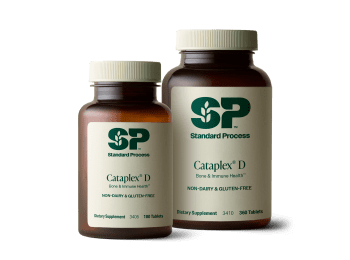
| Cataplex® DView product →Standard Process | Supports bone health, mineral absorption and immune system* | Per two tablets: vitamin A 300 mcg RAE, vitamin D 40 mcg and calcium 60 mg. Current ingredients: calcium lactate, potassium citrate, glycerine, acacia fiber, modified corn starch, sucrose, calcium stearate, vitamin A palmitate, ascorbic acid and cholecalciferol. | Two tablets daily, or as directed.Full ingredients and cautions → |
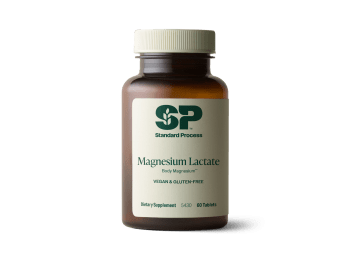
| Magnesium LactateView product →Standard Process | Magnesium Lactate delivers essential magnesium for system-wide cellular function* | Each Serving Size (2 Tablets) contains: Calories 10, Total Carbohydrate 1 g, Magnesium 200 mg. Ingredients: Magnesium lactate and calcium stearate. | Two tablets per day, or as directed.Full ingredients and cautions → |

Calcium Lactate
Review Calcium Lactate against calcium already supplied by your usual food and other products. Record the declared amount per serving and the number of tablets that serving represents. Bring those facts to a dietary or medication review rather than choosing by bottle size. The complete product page provides the directions and cautions; being over 50 does not establish the same supplemental amount for everyone.
View complete ingredients, cautions and sizes →Buy Calcium Lactate through WSNC inSITE ↗Calcifood®
Use Calcifood as a distinct formula example when discussing your existing routine. Its own ingredient statement and serving instructions are the relevant reference, including any ingredients that affect dietary fit. Do not assume that it contributes the same declared nutrient amounts as another bone-related product. A useful question is how its complete formula fits the plan you have already discussed with your practitioner.
View complete ingredients, cautions and sizes →Buy Calcifood® through WSNC inSITE ↗Cataplex® D
When reviewing Cataplex D, include vitamin D from every other product you use. Keep its labeled amount and serving separate from a general age-based reference value. Ask whether your circumstances warrant individual advice or testing rather than assuming that age alone establishes a need. Use the exact current product listing when confirming directions and the selected package.
View complete ingredients, cautions and sizes →Buy Cataplex® D through WSNC inSITE ↗Magnesium Lactate
Magnesium Lactate can help frame a discussion about magnesium already present in a multivitamin or combination formula. Compare the declared amount per serving, complete ingredients and cautions. It is a different nutrient-focused comparison from calcium. Do not treat a shared place in this guide as a reason to combine products without reviewing the full routine and individual suitability.
View complete ingredients, cautions and sizes →Buy Magnesium Lactate through WSNC inSITE ↗References: FDA: Information for supplement consumers · NIH NIA: Dietary supplements for older adults
Review total intake and medicines together
Put your supplement list next to your medicine list before a review. Record exact product names and the labeled servings you actually use. Include combination formulas, which may contain a nutrient you were about to add separately. This is a practical way to make overlap visible without relying on memory or on front-label marketing descriptions.
Ask your pharmacist or treating clinician about relevant interactions, timing and whether a supplement fits your care. Do not change medicine instructions based on an article or assume that a natural product cannot interact with treatment. A clear combined list is useful even when the result is to keep your routine simple rather than add anything new.
References: FDA: Information for supplement consumers · NIH NIA: Dietary supplements for older adults
Choose practical forms and a clear next step
Tablets, capsules and powders can create different practical questions. Consider whether you can follow the manufacturer’s serving instructions, measure a powder accurately and keep the product under the stated storage conditions. A larger package is a different order quantity, not permission to change the labeled serving.
Before purchasing, confirm the exact formula and package you reviewed. If a comparison leaves an amount, ingredient or caution unclear, open the detailed product record and ask for clarification. You can also use the calcium, vitamin D and magnesium guides for more focused label reading. The aim is a routine you can understand, explain and review as your circumstances change.
References: FDA: Information for supplement consumers
Questions to discuss before choosing a supplement
Does everyone over 50 need bone-health supplements?
Age alone does not establish the same dietary gap or product choice for everyone. Review usual food intake, existing supplements and individual health circumstances. Your clinician may recommend a dietary review, testing or another assessment when appropriate. The purpose of this guide is to organize those questions, rather than create a universal supplement routine based on a birthday.
Should women and men over 50 compare the same products?
Some of the label questions are shared, but individual needs and age-related reference values can differ. Consider diet, health history, medicines and existing products. Our separate guides for women and men over 50 cover broader life-stage nutrition; this page focuses on bone-related decisions. A shared product list should not be interpreted as identical advice for every reader.
What should I bring to a bone-health appointment?
Bring a medicine and supplement list with exact names, labeled amounts and how often you use them. Notes about usual food intake and any previous bone-health advice can also help. Ask which information is relevant to your own care. Do not assume that an online product comparison can replace an assessment of bone density, fracture risk or persistent symptoms.
How does this differ from the general bone-health guide?
The general guide explains nutrient roles, formula approaches and label differences. This article applies those questions to an existing routine after 50, including dietary patterns, activity and medication review. The two pages link to each other so that you can move from a broader decision to the ingredient details that help answer it.
Is a supplement enough if I already have a bone condition?
An established bone condition needs appropriate clinical management. A supplement may be part of an individual nutrition plan, but this guide does not advise replacing prescribed treatment or an activity plan. Review the complete product labels with the clinician managing your care and ask how any proposed addition fits the existing plan.
Evidence and product information sources
- NIH NIAMS: Calcium, vitamin D and bone health ↗
- NIH ODS: Calcium ↗
- NIH NIA: Dietary supplements for older adults ↗
- NIH NIA: Strength training as we age ↗
- FDA: Information for supplement consumers ↗
Educational references explain nutrition and evidence limits; they do not endorse WSNC or the products shown. Product comparisons use the existing catalog records. Confirm the current manufacturer label, selected package, complete directions and cautions before ordering.
Prepare a practitioner conversation →