WSNC nutrition education
Immune Support Supplements: Reading Labels for Cold and Flu Season
An immune support supplement is best evaluated by its complete formula, the amount you actually take and the nutritional question you are trying to answer. Cold and flu season is a useful time to review that routine, but an immune label does not establish that a product prevents infection. Start with food, existing supplements and individual suitability before adding another bottle.
Explore Immune & Respiratory Support →
Start with a nutritional question rather than a seasonal shopping list
A useful first question is whether you are trying to address a known dietary gap, compare formulas already recommended to you, or understand a product you have seen advertised. Those are different tasks. Writing down the question makes the comparison more focused than choosing the product with the longest ingredient list or strongest seasonal language.
NIH identifies adequate vitamins and minerals as important for normal immune function. That nutritional role does not make every supplement useful for every person. A restrictive diet, a clinician identified deficiency and a general wish to avoid winter illness should not be treated as equivalent reasons to buy the same formula.
References: NIH ODS immune function evidence
Separate immune support from prevention and treatment
The phrase supports immune function describes a different claim from prevents influenza or treats an infection. FDA does not approve dietary supplements for safety and effectiveness before marketing in the same way as drugs. An impressive product name, a testimonial or an ingredient citation is not proof that the complete formula prevents disease.
Keep your seasonal health plan separate from this shopping comparison. A supplement should not delay appropriate assessment, vaccination discussions or prescribed care. If you become ill, especially if you have a condition that raises your risk, ask a healthcare professional about your symptoms rather than increasing a supplement because its label mentions immunity.
References: FDA questions and answers about supplements
Read the serving size and directions as separate pieces of information
Supplement Facts may describe one tablet, several capsules or a measured powder serving. Directions may describe how often that serving is used. Copy both onto your comparison sheet. Comparing a three tablet nutrient amount with a one tablet amount without recording those units can produce a misleading impression of strength.
For example, the existing Cataplex C record lists 18 mg vitamin C per three tablets, while its directions say three tablets per meal, or as directed. Those are not interchangeable statements. The existing Zinc Chelate record lists 10 mg zinc per tablet. Read the full directions and consider your entire routine with your practitioner instead of converting a label comparison into a new dose recommendation.
Count nutrients across the products you already use
Place your multivitamin, individual vitamin D, mineral formulas and any seasonal blend together before comparing a new product. Write each product name, serving and frequency on one list. This shows whether the new choice would add a different ingredient or simply repeat something already in your routine.
A larger total is not automatically a better plan. If two formulas overlap, ask what each is intended to contribute and whether both are necessary. Bring actual labels to that conversation. A front label that highlights vitamin C can still contain other nutrients, botanicals, tissue ingredients or allergens that change the decision.
Standard Process examples that answer different label questions
These three examples illustrate vitamin C, vitamin D and zinc formulations already in the WSNC catalog. They are alternatives to investigate according to an individual question, not a seasonal stack. Their inclusion does not establish that any one prevents colds or flu.
Use the full comparison and product pages to inspect ingredients, directions and cautions. The purchasing links go directly to the selected authorized WSNC inSITE package. If a formula does not fit your diet or existing routine, a more appropriate next step may be a practitioner question rather than another purchase.
| Product | Listing focus | Declared formula in brief | Label directions |
|---|---|---|---|
| Cataplex® CView product →Standard Process | Immune system, skin and connective tissue, and bone health* | Three tablets supply vitamin C 18 mg, calcium 30 mg and sodium 50 mg, plus a 590 mg blend including veal bone, bovine adrenal, buckwheat, alfalfa, mushrooms, wheat germ and echinacea roots. | Three tablets per meal, or as directed.Full ingredients and cautions → |
| Cataplex® DView product →Standard Process | Supports bone health, mineral absorption and immune system* | Per two tablets: vitamin A 300 mcg RAE, vitamin D 40 mcg and calcium 60 mg. Current ingredients: calcium lactate, potassium citrate, glycerine, acacia fiber, modified corn starch, sucrose, calcium stearate, vitamin A palmitate, ascorbic acid and cholecalciferol. | Two tablets daily, or as directed.Full ingredients and cautions → |
| Zinc Chelate™View product →Standard Process | For support of immune system function* | Each tablet contains zinc 10 mg and a 220 mg proprietary blend of bovine liver, organic beet root, organic carrot and organic sweet potato. | One tablet daily, or as directed.Full ingredients and cautions → |
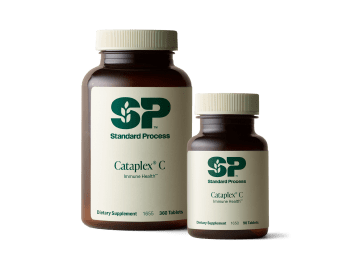
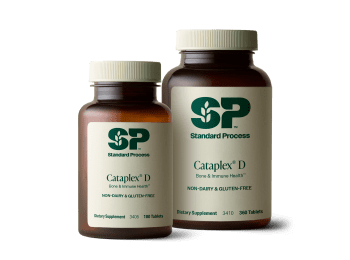
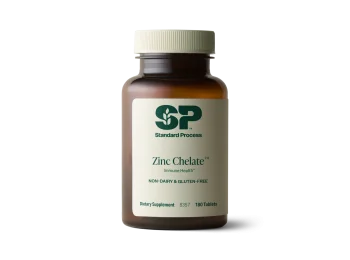
Cataplex® C
Cataplex C is a vitamin C containing whole food and tissue blend, not a high dose single ingredient vitamin C product. Its recorded wheat content, animal ingredients and daisy family caution deserve review alongside the declared vitamin amount. Keep the serving and per meal directions distinct.
View complete ingredients, cautions and sizes →Buy Cataplex® C through WSNC inSITE ↗Cataplex® D
Cataplex D supplies recorded vitamin D together with vitamin A and calcium. It is relevant when reviewing vitamin D intake, but winter alone does not establish a deficiency or the need for this particular formula. Include existing vitamin D products in the discussion.
View complete ingredients, cautions and sizes →Buy Cataplex® D through WSNC inSITE ↗Zinc Chelate™
Zinc Chelate provides recorded zinc with bovine liver, vegetables and honey. It is not a vegan or vegetarian example. A zinc tablet is not interchangeable with a specifically studied zinc lozenge, and ingredient research should not be presented as a trial of this complete formula.
View complete ingredients, cautions and sizes →Buy Zinc Chelate™ through WSNC inSITE ↗Whole food wording does not establish dietary compatibility
Check tissue ingredients, capsule material, honey, wheat and botanical cautions as carefully as the highlighted vitamin. The existing Zinc Chelate record includes bovine liver and honey. Cataplex C contains wheat and animal derived ingredients, and its recorded cautions include sensitivity to plants in the daisy family.
Those distinctions matter even when two products are displayed in the same health collection. Vegetarian, vegan, non dairy and allergen suitability are separate questions. Use the actual manufacturer label and your own requirements; a whole food description does not answer all four questions.
Make the comparison usable throughout the season
Keep one dated personal list of what you actually take and the reason for each item. When a bottle changes or another clinician recommends something, update the list before adding it to your routine. A photo of the full label is more useful than remembering a brand name alone.
For a follow up visit, bring three questions: What nutritional need are we addressing? Does this formula repeat another ingredient? What would prompt us to reassess it? These questions give the discussion a clear purpose without turning the change of season into an automatic supplement schedule.
Common questions
What is the best supplement for cold and flu season?
There is no single best formula for every adult. Start with a nutritional question, current intake, complete labels and individual suitability. An immune support label does not establish prevention of colds or influenza.
Can I take several immune support products together?
Do not assume a category name makes products suitable to combine. Compare overlapping nutrients, complete ingredients, directions and medicines with your healthcare professional.
Is whole food the same as vegetarian?
No. Some formulas include animal tissue, honey or gelatin. Check the exact product rather than assuming dietary compatibility from whole food wording.
Does this page recommend a new daily dose?
No. The comparison retains existing manufacturer directions and explains how to read them. Individual use belongs with your healthcare professional.
Does ingredient research prove a formula prevents flu?
No. Findings about one ingredient, dose or preparation do not automatically establish an outcome for a different complete formula.
Evidence and product information sources
- NIH ODS immune function evidence ↗
- FDA questions and answers about supplements ↗
- Cataplex C authorized product listing ↗
- Cataplex D authorized product listing ↗
- Zinc Chelate authorized product listing ↗
Educational references explain nutrition and evidence limits; they do not endorse WSNC or the products shown. Product comparisons use the existing catalog records. Confirm the current manufacturer label, selected package, complete directions and cautions before ordering.
Prepare a practitioner conversation →