WSNC nutrition education
Vitamin D in Winter: Intake, Labels and Questions to Ask
Winter can change time outdoors and usual eating patterns, but the season does not tell you your vitamin D level. Review food, fortified drinks and supplements already in your routine before adding another product. This guide helps you prepare that seasonal conversation; the ingredient guide provides the broader comparison of vitamin D forms and labels.
Explore Bone, Joint & Muscle →
What winter changes and what it cannot tell you
Shorter days and more time indoors can reduce opportunities for sunlight exposure. Latitude, skin exposure and other factors also affect production of vitamin D. Those observations explain why winter raises a useful nutrition question; they cannot diagnose an individual deficiency.
Avoid using how tired you feel, the weather or the number of hours you work inside as a substitute for assessment. Instead, explain your routine to your healthcare professional. Include dietary restrictions, existing supplements and relevant medical history so the conversation is about your circumstances rather than a seasonal rule.
References: NIH ODS vitamin D
Check the foods and drinks you actually consume
Look at the Nutrition Facts on the milk or plant beverage you buy, the cereal you regularly eat and other fortified foods. Fortification varies, so a familiar product category is not enough information. Record the labeled amount and the portion you actually use rather than assuming every alternative beverage provides the same nutrients.
For the consultation, a short record of typical meals is more useful than an ideal menu you rarely follow. Note whether fish, fortified drinks or other vitamin D sources appear regularly. If you have changed your diet for winter, travel or an allergy, explain that change before choosing a supplement.
References: NIH ODS vitamin D
Keep micrograms, IU and serving size together
Vitamin D labels may use micrograms and International Units. One microgram equals 40 IU, so 40 mcg corresponds to 1,600 IU. The unit conversion does not tell you whether that amount is right for you. Keep the amount attached to the number of tablets or capsules shown on the label.
NIH lists a recommended total daily intake of 600 IU for adults through age 70 and 800 IU for adults 71 and older. These are total intake reference values, not an instruction to add that amount on top of everything else. Compare your full intake and any clinician plan before treating a bottle serving as your personal requirement.
References: NIH ODS vitamin D
Review overlap before adding a winter bottle
A multivitamin, a bone formula and an individual vitamin D product may all contribute to the same total. Write them in separate rows with the labeled amount, serving and frequency. If the units differ, convert them consistently before comparing the routine.
Also record added ingredients. A vitamin D formula may supply vitamin A or calcium, and those ingredients belong in the conversation too. Choosing a product because of one nutrient while overlooking the rest of its formula can make a simple comparison less useful.
Ask whether testing or a change in use would affect a decision
The useful question is not simply whether a test exists. Ask what finding would change your plan and how your medical history affects the decision. NIH notes that routine vitamin D testing is not recommended for healthy individuals; specific risks and clinical circumstances can lead to a different discussion.
Do not start a high dose regimen based on a seasonal article or a friend’s laboratory result. If vitamin D has already been prescribed or recommended for a documented reason, ask the clinician managing that plan before changing it. This page does not replace a deficiency treatment plan.
References: NIH ODS vitamin D
Compare Cataplex D with a different mineral question
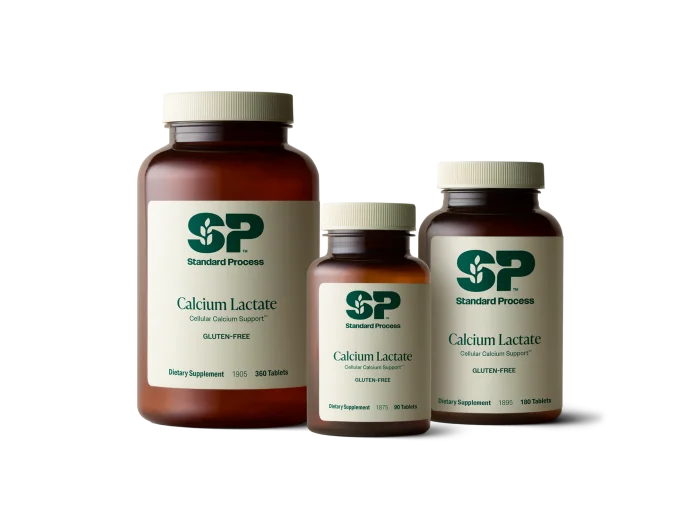
Cataplex D is the direct vitamin D example below. Calcium Lactate addresses a different comparison: calcium and magnesium without a recorded vitamin D amount. Showing both helps make the distinction visible rather than implying every product in the bone collection answers the same question.
Neither example is a recommendation to combine them. Read each full label, directions and cautions and take account of your current routine. The product links preserve the established package selections and direct authorized store destinations.
| Product | Listing focus | Declared formula in brief | Label directions |
|---|---|---|---|
| Cataplex® DView product →Standard Process | Supports bone health, mineral absorption and immune system* | Per two tablets: vitamin A 300 mcg RAE, vitamin D 40 mcg and calcium 60 mg. Current ingredients: calcium lactate, potassium citrate, glycerine, acacia fiber, modified corn starch, sucrose, calcium stearate, vitamin A palmitate, ascorbic acid and cholecalciferol. | Two tablets daily, or as directed.Full ingredients and cautions → |
| Calcium LactateView product →Standard Process | A vegan, non-dairy calcium-and-magnesium formula supporting healthy bone structure, muscle contraction, nerve transmission and cellular function.* | Three tablets provide calcium from calcium lactate and calcium stearate plus magnesium from magnesium citrate. | Three tablets per day, or as directed by your healthcare practitioner.Full ingredients and cautions → |
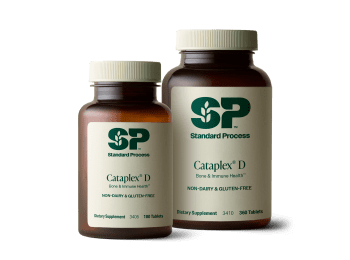
Cataplex® D
The existing record provides 40 mcg vitamin D, equivalent to 1,600 IU, per two tablets, with vitamin A 300 mcg RAE and calcium 60 mg. Recorded directions are two tablets daily, or as directed. The record notes older online labels differ; check the actual package and discuss pregnancy or nursing with your healthcare professional.
View complete ingredients, cautions and sizes →Buy Cataplex® D through WSNC inSITE ↗Calcium Lactate
Calcium Lactate is a calcium and magnesium comparison rather than a substitute for vitamin D. Its recorded three tablet serving supplies 260 mg calcium and 50 mg magnesium. Review it only when that mineral question fits your plan; the presence of a bone health connection does not establish a need to add it.
View complete ingredients, cautions and sizes →Buy Calcium Lactate through WSNC inSITE ↗Bring a short winter intake record to the conversation
Your record can fit on one page: typical fortified foods, all supplement names, amounts per serving, actual frequency and the reason for the review. Add any recent dietary change and questions about medicine timing. This creates a clear starting point without requiring you to decide the answer in advance.
Finish with a follow up question: When should we review this again, and what information should I bring? The response may be to keep the current plan, adjust food choices, investigate a particular risk or review a specific product. Buying a second bottle is only one possible outcome.
Common questions
Does living in a cold climate mean I am deficient?
No. Climate and time indoors provide context but do not establish your vitamin D status. Review intake and personal circumstances with your healthcare professional.
Should everyone test vitamin D in winter?
Routine testing is not recommended for all healthy people. Ask whether your circumstances make testing useful and how the result would change your plan.
Is 40 mcg the same as 1,600 IU?
Yes. For vitamin D, one microgram equals 40 IU. Keep the converted amount attached to the serving size.
Does Calcium Lactate replace vitamin D?
No. The recorded formula supplies calcium and magnesium. It does not answer the same label question as a vitamin D formula.
Should I increase my current product when winter starts?
Do not assume a seasonal increase is needed. Review the full routine and any existing clinician instructions first.
Evidence and product information sources
- NIH ODS vitamin D ↗
- Cataplex D authorized product listing ↗
- Calcium Lactate authorized product listing ↗
Educational references explain nutrition and evidence limits; they do not endorse WSNC or the products shown. Product comparisons use the existing catalog records. Confirm the current manufacturer label, selected package, complete directions and cautions before ordering.
Prepare a practitioner conversation →