Animal nutrition education
Metabolic Support Supplements for Horses: Formula and Feeding Questions
A metabolic-support supplement name identifies a product discussion, not a diagnosis or a complete feeding strategy. Compare the exact equine formula with the horse’s existing ration, medicines and veterinary advice. The useful question is what a proposed product would contribute to that plan—not whether its name sounds compatible with a concern you have noticed.
Explore Animal Health →
Start with a defined veterinary nutrition question
Record the reason you are considering a metabolic-support product and the information already provided by the veterinarian. Keep an observation, an established diagnosis and a proposed product separate on the worksheet. A category page cannot determine what is happening in an individual horse or establish the cause of a change in condition, behavior or performance.
If there is an unexplained concern, obtain appropriate assessment before using a supplement name to select an explanation. The feeding plan, any prescribed management and the monitoring decisions belong with the professionals advising on that horse. This guide helps compare a label and prepare questions; it does not create a diet prescription or a treatment program.
Bring the complete feeding record to the comparison
List forage, feeds, treats, other products and medicines using their exact names. Keep existing instructions and the person responsible for feeding identifiable. A proposed metabolic formula is one possible addition to that wider record, not a way to make any ration appropriate. Ask how its complete composition would fit the plan already in place.
If an ingredient or nutrient amount matters to the review, retain the actual label value and serving basis. Do not infer overall dietary suitability from a single highlighted nutrient or the word metabolic. A useful record makes the whole routine visible, including overlapping products, instead of presenting the new powder as an isolated choice.
Compare Standard Process Equine Metabolic Support
Equine Metabolic Support is the focused example in this guide. Its complete recorded ingredients, directions and cautions are shown below so that the comparison goes beyond the product name. It is not represented as a substitute for prescribed feeding or veterinary management, and no individual clinical outcome is established by its inclusion.
Use the product page for full package details and the direct WSNC inSITE purchase destination. The broader horse guide distinguishes digestive, mobility and metabolic purposes. A targeted guide should make the actual formula easier to assess rather than automatically add unrelated products to create a larger selection or an apparent multi-product program.
| Product | Listing focus | Declared formula in brief | Label directions |
|---|---|---|---|
| Equine Metabolic SupportView product →Standard Process Veterinary Formulas | Healthy glucose metabolism | The ¼-cup (37 g) proprietary blend contains buckwheat flour, carrot, cinnamon, licorice, green tea extract, cayenne, chromium yeast and vanadium chelate. | Administer orally. Includes ¼ cup scoop. Give 1/4 cup (37 g) per 1,000 lb. horse per day, or as directed.Full ingredients and cautions → |
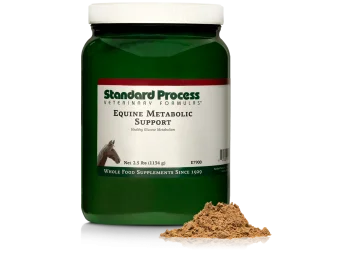
Equine Metabolic Support
A recorded equine metabolic-support blend with a 37 g quarter-cup serving and product-specific directions. The whole blend weight does not disclose every component amount. Review the full formula with the actual feeding plan, medicines and veterinarian; the name does not establish treatment or a diet replacement.
View complete ingredients, cautions and sizes →Buy Equine Metabolic Support through WSNC inSITE ↗Keep the 37 gram declaration specific to this formula
The recorded Equine Metabolic Support quarter-cup serving weighs 37 g. That differs from the gram declarations used for some other equine powders. Preserve the exact volume, weight, horse-weight basis and frequency when reading the directions. A quarter-cup volume alone does not make the formula equivalent to a 30 g or 33 g serving of another product.
Keep the manufacturer’s measuring instructions with the selected package. If the amount, tool or circumstances are unclear, ask for clarification rather than interpolating a schedule. This guide does not propose a new individualized amount or adjust a product according to a clinical measurement. Those decisions require the actual care plan and appropriate professional advice.
Do not infer undeclared amounts inside a blend
A proprietary blend’s total weight is not a separate amount for every ingredient it contains. Ingredient order also does not establish exact quantities. Keep missing information explicit when comparing products and request any needed detail from the manufacturer. A precise-looking estimate can be more misleading than an honest statement that an individual value is not declared.
Research about a particular ingredient, preparation or amount cannot automatically establish the same outcome for a complete formula with a different composition. Keep ingredient education distinct from finished-product claims. The question is whether the actual formula fits a defined nutritional purpose, not whether one familiar ingredient makes every product in the category interchangeable.
Review restrictions, overlap and practical administration
Read all ingredients and complete cautions alongside medicines, other products and any existing feeding restrictions. A natural or whole-food description does not establish compatibility with every individual circumstance. If another blend is already given, compare the full labels rather than assuming different names mean there is no overlap. Retain all manufacturer caution language in the discussion.
Then consider whether the routine can follow the actual preparation and storage instructions. Identify the responsible caregiver and how an uncertain administration will be handled. Do not allow a convenient scoop, a different stable or a refused feed to become an improvised instruction to change the amount or substitute another formula.
Prepare a review and a separate competition check
Ask what purpose the proposed formula would serve, what information is still needed and how the wider feeding and care plan should be reviewed. Do not change prescribed management based on this guide. If the horse becomes unwell or develops a concerning change, contact the veterinarian rather than treating a metabolic-support name as a reason to increase a product.
For a competing horse, review the exact label against the current requirements of the relevant governing body, as the manufacturer cautions. A nutritional purpose does not establish competition clearance or supply withdrawal advice. Individual suitability and organizational eligibility are different questions, and each needs an appropriate source of guidance.
References: FDA: animal health and veterinary care
Questions horse owners ask
Does metabolic support diagnose a condition?
No. A product category cannot establish an individual diagnosis or the cause of an observed change.
Can this replace a prescribed feeding plan?
Do not replace prescribed feeding or care based on this guide. Review any proposed change with the professionals managing the horse.
Is its quarter-cup serving the same weight as every equine powder?
No. The recorded declaration for this formula is 37 g. Keep each exact product’s measure and gram amount distinct.
Does the blend total disclose every ingredient amount?
No. Request needed individual quantities from the manufacturer rather than inferring them from the total or ingredient order.
Can I adjust the amount using a laboratory result?
This guide supplies no such schedule. Product use, feeding and monitoring decisions belong within the individualized veterinary plan.
Evidence and product information sources
- FDA: animal food and supplement categories ↗
- FDA: animal health and veterinary care ↗
- Equine Metabolic Support authorized product information ↗
Animal guides explain label comparisons and questions for a veterinarian. They do not replace veterinary diagnosis, treatment or an individualized diet review.
Educational references explain nutrition and evidence limits; they do not endorse WSNC or the products shown. Product comparisons use the existing catalog records. Confirm the current manufacturer label, selected package, complete directions and cautions before ordering.
Return to the species collection →