Animal nutrition education
Digestive Support for Horses: GI Formulas, Feed and Inulin Labels
Digestive support for horses is a broad category that needs a specific feeding and veterinary context. A GI-support blend is not automatically a probiotic, enzyme-only product or protection against digestive illness. Start with the existing forage and feed routine, then compare the complete equine label and the exact question a proposed formula is meant to address.
Explore Animal Health →
Record the existing feed and routine accurately
List the forage, feeds, treats, supplements and medicines the horse actually receives, with the names and instructions kept together. Include who handles feeding and what information a different caregiver would need. The record should describe the routine rather than assume the cause of a digestive concern. A clear account gives the veterinarian or nutrition professional a useful basis for assessment.
Separate an established nutrition question from a new or ongoing health problem. A shopping guide cannot determine why a horse is unwell or establish that adding a digestive powder is the appropriate next step. Arrange veterinary advice for a concern and keep the existing care plan intact while reviewing the proposed formula.
Distinguish a GI blend from probiotics and enzymes
Read the full ingredient list instead of assigning a formula type from the word digestive. A complex equine blend can include several kinds of ingredients without being a standalone probiotic or enzyme-only preparation. Products sold in the same general category may have different purposes and directions. A shared category does not establish equivalent effects.
If comparing preparations, record the exact ingredients, serving basis and intended discussion for each. Research involving a particular organism or isolated ingredient cannot automatically be transferred to a different complete formula. The product decision should remain specific to what is actually in the selected package and why it is being considered.
Compare Standard Process Equine GI Support
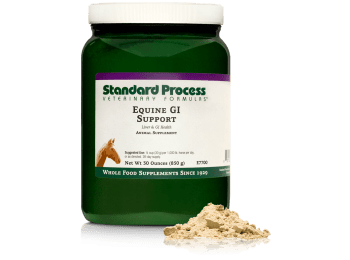
Equine GI Support is the focused product example in this guide. Its recorded composition includes inulin and other ingredients in a complete equine blend. The full panel below preserves the existing ingredients, directions and cautions. Its presence here does not establish that every horse needs the formula or that it prevents illness during a change in routine.
Use the product page for complete package information and the direct authorized WSNC inSITE destination. The broader whole-food guide compares different equine purposes, while the travel guide addresses storage and caregiver handoffs. Keeping those questions separate avoids turning a practical change in routine into an automatic multi-product feeding recommendation.
| Product | Listing focus | Declared formula in brief | Label directions |
|---|---|---|---|
| Equine GI SupportView product →Standard Process Veterinary Formulas | Antioxidant support for GI health | The ¼-cup (30 g) serving includes whey protein (milk), flax meal, L-glutamine, inulin from chicory root, rice protein, vegetables and other ingredients. No probiotic CFU amount is declared. | ¼ cup (30 g) per 1,000 lb. horse per day, or as directed. 28-day supply.Full ingredients and cautions → |
Equine GI Support
A recorded equine gastrointestinal blend with inulin and other ingredients, a 30 g quarter-cup serving and its own manufacturer directions. The full serving weight does not disclose an individual inulin amount. It is not presented as a standalone probiotic or prevention of digestive illness.
View complete ingredients, cautions and sizes →Buy Equine GI Support through WSNC inSITE ↗Do not infer the individual inulin amount
The presence of inulin in a formula and the weight of the whole serving are different pieces of information. A blend’s total weight does not disclose the amount of each component. If an individual quantity is not declared in the record, do not fill the gap with a competitor’s label, an ingredient study or an estimate based on ingredient order.
Ask the manufacturer if an amount is needed for the nutrition review. Preserve the label’s actual units and qualifiers when comparing products. The useful outcome is an honest account of what is known and what remains unspecified, rather than a numerical table that appears complete because missing values have been guessed.
Keep the 30 gram serving with its own directions
The recorded Equine GI Support quarter-cup serving is 30 g. Other horse powders can use the same volume wording with a different gram declaration. Retain this product’s horse-weight basis, frequency and measuring instructions rather than transferring a scoop or schedule from another container. The formula name does not supply the rest of the directions.
If preparation, a lost measuring tool or an unlisted circumstance creates uncertainty, seek clarification from the veterinarian or manufacturer. This page does not propose an individualized amount or an extra travel-serving schedule. A harder day or a different feeding location is not a reason to invent a new administration plan.
Plan changes in caregivers and location
A written handoff should identify the exact food, product, measure, storage and contact for questions. Confirm that the receiving stable or caregiver can follow the established instructions. Do not assume someone unfamiliar with the routine can select a substitute digestive formula or decide how much to add when feed is left behind.
For travel or a change in routine, review practical requirements before departure rather than relying on a digestive-support label as a safeguard. Facility requirements, care access and assessment of illness remain separate preparations. The linked travel guide provides a more focused packing and handoff framework without claiming prevention of digestive problems.
Prepare a clear veterinary review
Bring the feeding record, exact formula and reason for interest. Ask what the product would add, whether it overlaps something already offered and what information is needed to assess suitability. Keep all ingredient restrictions and complete caution language part of that discussion. A natural or whole-food description does not remove those questions.
If the horse is unwell or develops a concerning change, contact the veterinarian rather than increasing a product because its label mentions the GI system. This guide offers no diagnosis, disease-prevention claim or fixed response timeline. Its role is to make a product comparison and the next professional conversation clearer.
References: FDA: animal health and veterinary care
Questions horse owners ask
Is every horse GI supplement a probiotic?
No. Read the actual composition rather than inferring a formula type from a broad digestive or GI name.
Does the serving weight tell me the inulin amount?
No. The complete serving and a single component are different quantities. Do not infer an undeclared amount from ingredient order.
Can another equine powder’s scoop be substituted?
Do not assume equivalence. Follow the exact package’s measuring and administration instructions and seek clarification when needed.
Should travel automatically trigger extra digestive powder?
No extra schedule is established here. Review the existing routine and trip with the veterinarian rather than inventing a travel increase.
Does this replace veterinary assessment of a digestive concern?
No. A nutritional comparison cannot determine the cause of illness or replace diagnosis and care.
Evidence and product information sources
- FDA: animal food and supplement categories ↗
- FDA: animal health and veterinary care ↗
- Equine GI Support authorized product information ↗
Animal guides explain label comparisons and questions for a veterinarian. They do not replace veterinary diagnosis, treatment or an individualized diet review.
Educational references explain nutrition and evidence limits; they do not endorse WSNC or the products shown. Product comparisons use the existing catalog records. Confirm the current manufacturer label, selected package, complete directions and cautions before ordering.
Return to the species collection →