Animal nutrition education
Traveling With Horse Supplements: Feed, Storage and Caregiver Handoffs
Traveling with horse supplements is a practical exercise in preserving an appropriate existing routine. Keep the exact product, measuring instructions and storage requirements identifiable from the home stable to the destination. Supplements do not replace transport planning, veterinary documents, facility requirements or a care plan. Begin with a written feeding record rather than adding products simply because the horse will travel.
Explore Animal Health →
Trace the whole trip before packing
List the home stable, loading arrangements, transport, stops, destination storage and return journey. Identify who is responsible for the horse and products at each stage. Thinking through the sequence can reveal an unclear handoff or a storage question that is easy to miss when planning only for the destination. A container being convenient to pack does not establish that all instructions can be maintained.
Keep the product decision separate from the logistics decision. If an established formula belongs in the routine, ask how that routine can be followed. Do not turn a long journey or unfamiliar stable into an automatic reason to start several new products. Resolve unclear instructions with the veterinarian or manufacturer before relying on an improvised arrangement.
Create an exact feed and product inventory
Record the forage and feeds, each supplement’s full name, selected package, measure and existing directions. Keep medicines clearly identified as well. Photographs of complete labels can support the written record, but another caregiver still needs instructions that are specific enough to follow. Similar powders and quarter-cup measures should not be left to memory.
Identify who checks that the routine was followed and whom to contact when something is uncertain. A useful inventory describes what is actually used rather than everything stored in the tack room. Keep an unassessed proposed product on a separate questions list. That avoids a new bottle being mistaken for an established part of the veterinary or feeding plan.
Compare Standard Process examples without creating a travel stack
Equine GI Support and Equine Immune Support illustrate two different nutritional discussions that may appear in travel-related searches. Their inclusion here does not recommend starting both or establish protection against illness during transport. The complete existing panels retain their compositions, directions and cautions so that the products remain distinguishable.
Use the focused digestive and immune guides for formula-selection questions. This page addresses packing, storage and handoff. A travel theme should not erase the differences between product purposes or turn a list of examples into an administration program. The appropriate plan may simply be to maintain an already suitable routine without adding either formula.
| Product | Listing focus | Declared formula in brief | Label directions |
|---|---|---|---|
| Equine GI SupportView product →Standard Process Veterinary Formulas | Antioxidant support for GI health | The ¼-cup (30 g) serving includes whey protein (milk), flax meal, L-glutamine, inulin from chicory root, rice protein, vegetables and other ingredients. No probiotic CFU amount is declared. | ¼ cup (30 g) per 1,000 lb. horse per day, or as directed. 28-day supply.Full ingredients and cautions → |
| Equine Immune SupportView product →Standard Process Veterinary Formulas | Healthy immune system function | A ¼-cup (30 g) serving contains a 30 g proprietary blend with whey protein (milk), turmeric, mushrooms and EpiCor dried yeast fermentate. Individual ingredient amounts are not declared. | Administer orally. Includes ¼ cup scoop. Give ¼ cup (30 g) per 1,000 lb. horse per day. 28 scoops per container.Full ingredients and cautions → |
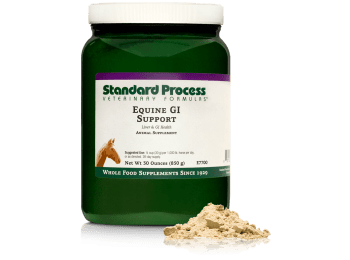
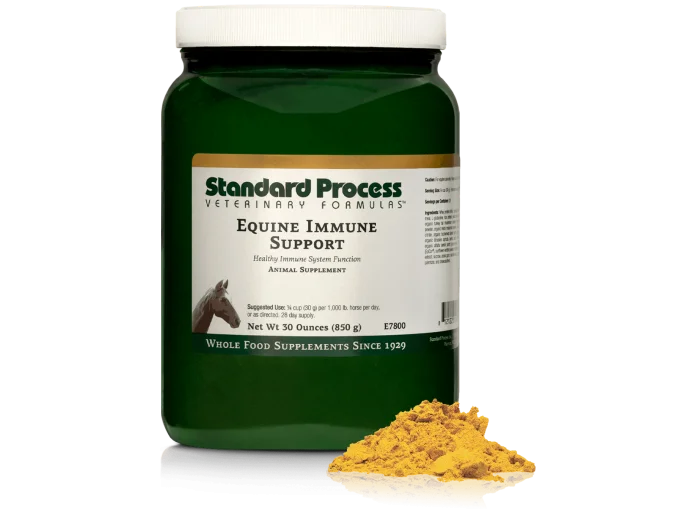
Equine GI Support
A gastrointestinal blend whose exact measuring and administration instructions must remain identifiable during a stable handoff. Its inclusion does not establish prevention of digestive illness during travel or a reason to create an extra travel amount.
View complete ingredients, cautions and sizes →Buy Equine GI Support through WSNC inSITE ↗Equine Immune Support
A separate immune-support formula with its own complete blend and cautions. It is not interchangeable with the GI powder or a substitute for transport, facility or veterinary health requirements.
View complete ingredients, cautions and sizes →Buy Equine Immune Support through WSNC inSITE ↗Let each package determine its storage plan
Read the exact manufacturer instructions for the product being transported. Do not assume that every powder has one universal safe temperature, can be refrigerated or tolerates an unspecified time in a warm vehicle. If the instructions do not answer the expected conditions, ask the manufacturer using the actual product, package and duration involved.
An insulated bag, sealed bin or temperature display does not by itself prove that the required conditions are met. Keep identity and lot information available if a later question arises. When a package experiences unexpected conditions, seek product-specific advice rather than deciding that its appearance establishes stability. This guide supplies no general exposure threshold or storage exception.
Keep measuring tools and preparation instructions together
Carry the correct product-specific tool or obtain an appropriate replacement with manufacturer guidance. Retain both the volume wording and gram declaration where provided. The same volume can represent different weights for different formulas, so a shared scoop and an informal instruction to add a measure can create ambiguity. Make the intended product and unit explicit.
Ask how the caregiver should handle refused feed, a preparation that cannot be followed or an uncertain amount. Do not leave those situations to a guessed extra serving or a substitute powder. The written handoff should identify the limits of the caregiver’s role and the contact who can resolve a question. Convenience should help maintain the plan, not change it.
Keep transport and competition requirements separate
The veterinarian and responsible travel authorities can help identify destination and transport requirements for the actual journey. Check the receiving stable or event’s instructions as well. A supplement packing checklist does not establish compliance with health documentation, facility policies or organizational rules. Those are separate preparations that need current information.
For competing horses, retain the manufacturer’s caution to check the relevant governing body regarding ingredients that could be controlled. Nutritional wording does not establish eligibility or a withdrawal schedule. Review the exact formula and current rules with the appropriate professionals. Answering a storage question does not answer a competition question, and neither replaces veterinary assessment of individual suitability.
Prepare the care and return-home handoff
Identify veterinary contacts, the person authorized to make care decisions and the information needed if the horse becomes unwell. A digestive or immune-support label should not become the instruction to increase a product instead of obtaining advice. Keep the care plan separate from the ordinary feeding instructions so that the next step is clear during a concern.
On return, collect a factual record of products and feeds actually given, instructions that could not be followed and any concerns observed. Share relevant information with the veterinarian before changing the routine again. The point of a travel review is an accurate handoff and a usable plan, not a promise that a supplement prevents every problem associated with a trip.
References: FDA: animal health and veterinary care
Questions horse owners ask
Should every traveling horse start extra supplements?
No automatic need or extra travel schedule is established. Review the existing routine and actual trip with the veterinarian.
Can all powders use the same storage bin or cooler?
Do not assume the same requirements. Follow each exact package’s instructions and ask the manufacturer if the expected conditions are unclear.
Is a quarter-cup scoop universal?
No universal equivalence is established. Retain each formula’s own measuring instructions and gram declaration.
Do supplement labels establish travel eligibility?
No. Transport documents, destination requirements, facility policies and competition rules are separate matters.
What if storage conditions change unexpectedly?
Keep the exact package and exposure details and seek manufacturer advice. This guide does not establish a universal safe temperature or duration.
Evidence and product information sources
- FDA: animal food and supplement categories ↗
- FDA: animal health and veterinary care ↗
- Equine GI Support authorized product information ↗
- Equine Immune Support authorized product information ↗
Animal guides explain label comparisons and questions for a veterinarian. They do not replace veterinary diagnosis, treatment or an individualized diet review.
Educational references explain nutrition and evidence limits; they do not endorse WSNC or the products shown. Product comparisons use the existing catalog records. Confirm the current manufacturer label, selected package, complete directions and cautions before ordering.
Return to the species collection →