Animal nutrition education
Immune Support Supplements for Horses: Seasonal Routine and Formula Labels
Seasonal changes, travel and an altered stable routine can be useful occasions to review a horse’s established nutrition plan. They do not by themselves establish a need for an immune-support supplement. Compare the exact equine formula, complete cautions and reason for interest, while keeping nutritional support separate from infection prevention, facility requirements and veterinary care.
Explore Animal Health →
Define the seasonal question clearly
Describe what is actually changing: feeding arrangements, travel, caregiver, time in a different setting or another part of the ordinary routine. Then identify the nutrition question you want answered. A calendar change is not a diagnosis or proof of a deficiency. The veterinarian or appropriate equine nutrition professional can help assess the significance of the individual circumstances.
Keep an existing feeding review separate from a new health concern. An immune-support category should not become a way to explain illness or select a product before the concern is assessed. A useful comparison starts with a clear purpose and an accurate record of the current routine rather than a list of seasonal products advertised together.
Separate immune support from disease prevention
A nutritional support description does not establish that the exact finished formula prevents infection or replaces other care. An ingredient’s biological role, a testimonial or a product name is not the same as evidence of a clinical outcome for the individual horse. Preserve that distinction when reading a manufacturer description or comparing several products in one category.
Keep veterinary health advice, facility requirements and any prescribed care separate from the supplement decision. A product should not become the reason to defer assessment when the horse is unwell. This guide helps read the label and prepare questions; it establishes neither a disease-prevention program nor a replacement for the veterinarian’s individualized plan.
Compare Standard Process Equine Immune Support
Equine Immune Support is the focused example here. The recorded formula combines several ingredients rather than representing one isolated nutrient. The complete panel below retains the existing manufacturer-based ingredients, directions and cautions. Its inclusion does not recommend that every horse start the product at a certain season or combine it with other equine powders.
Use the product page for complete package information and the direct authorized WSNC inSITE destination. The whole-food horse overview compares different formula purposes, while the travel guide focuses on practical handoffs. Keeping those pages distinct makes it easier to identify the actual question instead of treating every change in routine as the same supplement decision.
| Product | Listing focus | Declared formula in brief | Label directions |
|---|---|---|---|
| Equine Immune SupportView product →Standard Process Veterinary Formulas | Healthy immune system function | A ¼-cup (30 g) serving contains a 30 g proprietary blend with whey protein (milk), turmeric, mushrooms and EpiCor dried yeast fermentate. Individual ingredient amounts are not declared. | Administer orally. Includes ¼ cup scoop. Give ¼ cup (30 g) per 1,000 lb. horse per day. 28 scoops per container.Full ingredients and cautions → |
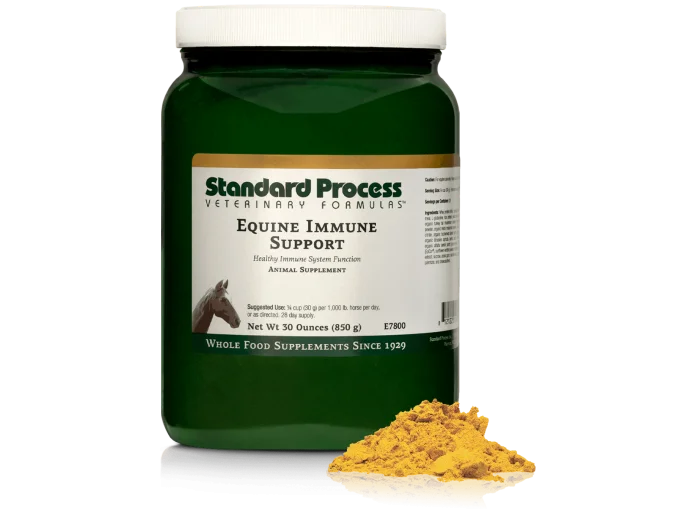
Equine Immune Support
A recorded 30 g equine blend with multiple food and other ingredients and its own complete caution language. The total blend weight does not disclose every component amount. Review the formula’s specific nutritional purpose without interpreting immune support as prevention or treatment of infection.
View complete ingredients, cautions and sizes →Buy Equine Immune Support through WSNC inSITE ↗Review the whole feeding and product record
List forage, feeds, treats, medicines and all products already given. Bring actual labels when discussing a proposed addition. A front label that emphasizes immune support can still contain many other ingredients that affect the comparison. Do not assume a targeted name makes the formula independent of the rest of the diet or free of overlap with another blend.
Review individual restrictions and the complete caution language as part of the decision. A whole-food or natural description does not establish suitability for every animal, preparation or circumstance. If the veterinarian needs an individual amount not declared in the record, obtain manufacturer clarification rather than filling the gap from another product’s label.
Keep blend totals and serving directions distinct
The recorded quarter-cup serving for Equine Immune Support is 30 g. That declaration describes the complete serving, not a separate amount for every mushroom, botanical or other component. Retain the exact measure, horse-weight basis and frequency from the product’s directions. Do not transfer another equine powder’s gram weight simply because it also uses quarter-cup wording.
Keep the appropriate measuring instructions with the selected package. An uncertain amount, lost tool or unlisted circumstance calls for clarification rather than an improvised seasonal increase. This page does not create a loading period, an extra travel schedule or a new individualized amount. The exact label and veterinary directions remain the relevant instructions.
Make seasonal handoffs practical
If another person will feed the horse, provide the exact product identity, existing directions, measuring information, storage requirements and contact for questions. Confirm that the receiving stable or caregiver can follow those instructions. A product being convenient to pack does not establish that every transport or storage condition is acceptable.
Ask in advance how to handle refused feed, uncertain administration or a preparation that cannot be maintained. Do not leave the caregiver to select a similar immune product or increase a powder when the horse seems different. The linked travel guide offers a more detailed framework for these practical issues without claiming that supplementation prevents problems during the trip.
Prepare a care review and a competition check
Ask what nutritional purpose the formula would serve, whether it overlaps the existing routine and how the overall plan should be reviewed. Keep a factual record of what was actually given and any concerns. If the horse becomes unwell, seek veterinary advice instead of interpreting the immune-support name as an instruction to give more. No fixed response timeline is established by this page.
For competing horses, follow the manufacturer’s caution to check the relevant governing organization about ingredients that may be controlled. Nutritional wording does not establish universal clearance or a withdrawal interval. Review the exact product and current rules with the responsible professionals, separately from the question of individual feeding suitability.
References: FDA: animal health and veterinary care
Questions horse owners ask
Should every horse start immune supplements each winter?
No automatic seasonal need is established. Review the actual feeding plan and individual question with the veterinarian.
Does immune support mean infection prevention?
A nutritional product description does not establish prevention or replace veterinary care or facility health requirements.
Can I calculate each ingredient amount from the blend total?
No. A whole-blend weight does not disclose every component quantity. Obtain any needed clarification from the manufacturer.
Does travel justify an extra amount?
This guide provides no loading or travel-increase schedule. Follow the exact product and individualized veterinary instructions.
Is an immune formula automatically permitted in competition?
No blanket eligibility is established. Check the current governing-body rules against the exact complete formula.
Evidence and product information sources
- FDA: animal food and supplement categories ↗
- FDA: animal health and veterinary care ↗
- Equine Immune Support authorized product information ↗
Animal guides explain label comparisons and questions for a veterinarian. They do not replace veterinary diagnosis, treatment or an individualized diet review.
Educational references explain nutrition and evidence limits; they do not endorse WSNC or the products shown. Product comparisons use the existing catalog records. Confirm the current manufacturer label, selected package, complete directions and cautions before ordering.
Return to the species collection →